EN
EN

Product Category Description: Connecting Rod
Page Introduction
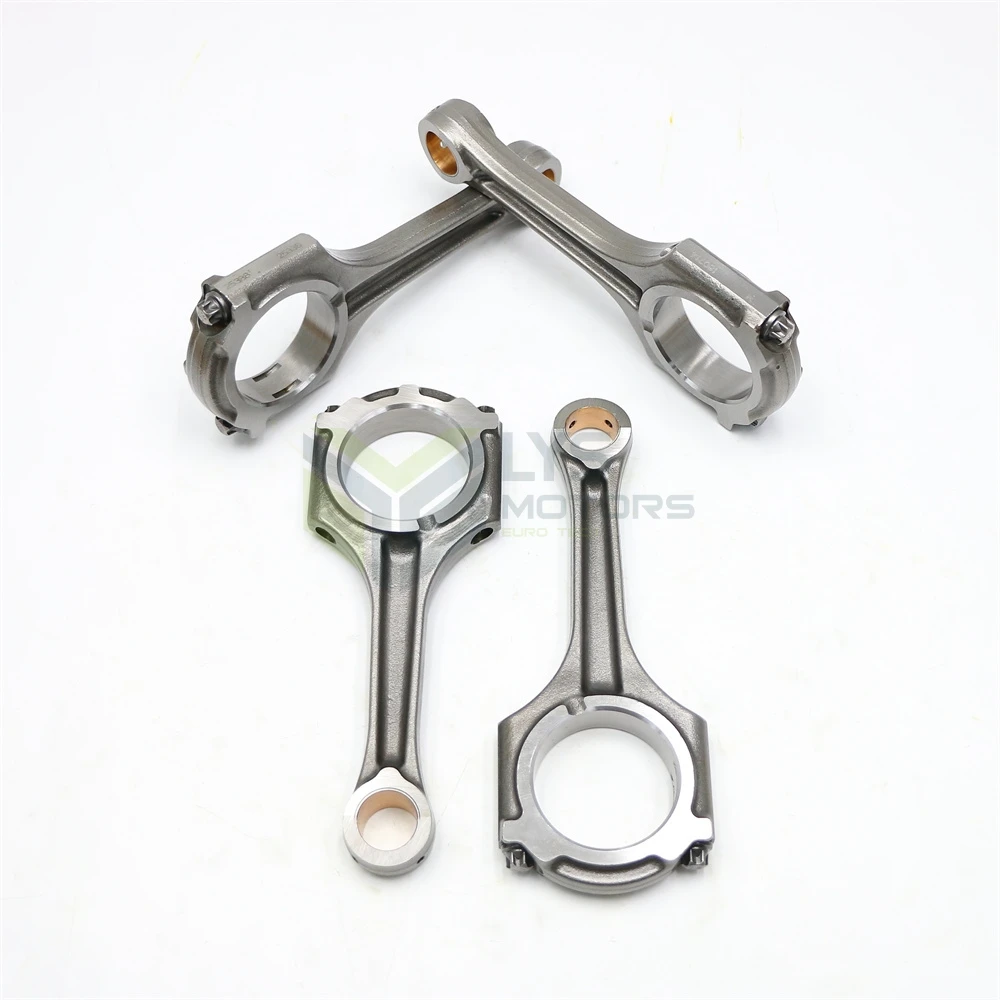
Within the high-stakes environment of an internal combustion engine, the Connecting Rod stands as a critical and unforgiving pivot point, a masterfully engineered component that serves as the indispensable link between the linear fury of the piston and the rotational genius of the crankshaft. This deceptively simple-looking piece is, in fact, a high-precision lever that translates the violent, downward force of combustion into the smooth, rotary motion that propels a vehicle forward. Operating in an arena of extreme and contradictory forces—immense compressive loads during the power stroke, followed by intense tensile loads during the exhaust and intake strokes—the Connecting Rod is subjected to a relentless cycle of stress that demands absolute structural integrity. The performance of this single component is a direct determinant of an engine's ability to rev freely, produce power reliably, and withstand the added pressures of forced induction or high-compression tuning. A failure of the Connecting Rod is often catastrophic, making its selection one of the most crucial decisions in any engine build, from a routine rebuild to an all-out race engine. Our category of high-performance and OEM-specification Connecting Rod components represents the zenith of metallurgical science and precision engineering, designed not just to meet these demands, but to excel under them, providing the robust, reliable linkage that is the foundation of power and durability.
Advantage Highlights
Choosing a premium Connecting Rod is an investment in the fundamental strength and operational excellence of your engine. Our products are engineered to deliver a suite of distinct advantages that ensure superior performance and longevity.
1. Ultimate Tensile and Fatigue Strength for Maximum Reliability
The primary duty of any Connecting Rod is to survive. Our Connecting Rod components are manufactured from materials and processes specifically chosen to achieve unparalleled tensile strength and, more importantly, exceptional fatigue strength. This means the Connecting Rod can endure the billions of load cycles from compression and tension forces over its service life without stretching, bending, or fracturing. This inherent robustness is the first line of defense against catastrophic engine failure, providing the confidence to explore higher power levels and higher RPM limits.
2. Optimized Weight and Design for Enhanced Engine Response
The weight of a Connecting Rod directly impacts engine responsiveness and the ability to rev freely. Our Connecting Rod designs are the product of extensive computer-aided engineering (CAE) and weight-optimization processes. By strategically removing material from non-critical areas while reinforcing high-stress zones, we achieve an ideal balance of minimal mass and maximum strength. Lighter Connecting Rod assemblies reduce reciprocating mass, which translates to reduced inertia, quicker throttle response, and less power absorbed by the engine simply moving its own internal components, freeing up more power for the drivetrain.
3. Exceptional Dimensional Accuracy for Perfect Engine Harmony
The precision of a Connecting Rod's dimensions is non-negotiable for a balanced and efficient engine. Our Connecting Rod components are machined to ultra-tight tolerances for center-to-center distance (the length between the piston pin and crankshaft journal bores), big end bore roundness, and small end bore accuracy. This precision ensures consistent compression height across all cylinders, which is fundamental for achieving uniform combustion and balanced power output. It also guarantees perfect bearing crush and oil clearance, which are critical for lubrication and longevity.
4. Superior Bearing Security and Oil Control
The connection between the Connecting Rod and the crankshaft is safeguarded by a precision bearing. The big end of our Connecting Rod is designed and machined to provide perfect bore geometry and surface finish. This ensures the bearing is seated securely without distortion, preventing spinning—a common cause of immediate engine seizure. Furthermore, precise machining and design help maintain a stable oil film on the bearing journal, ensuring consistent lubrication and heat dissipation, which is vital for high-RPM and high-load operation.
5. Robust Fastener Integration for Uncompromised Clamping Force
The cap of the Connecting Rod is attached by fasteners that are arguably the most highly stressed bolts in the entire engine. Our premium Connecting Rod kits include, and are often designed specifically for, high-grade Connecting Rod bolts or studs, typically made from alloy steel and heat-treated to extreme hardness. The threads in the rod body are precision-cut to ensure perfect engagement and even load distribution. This integration guarantees a consistent and massive clamping force that keeps the big end cap securely fastened to the rod body, preventing cap walk and fretting under extreme combustion pressures.
Manufacturing & Process Selling Points
The exceptional performance of our Connecting Rod inventory is a direct result of employing the most advanced manufacturing methodologies and rigorous quality control protocols. Each process is meticulously controlled to transform raw material into a component of absolute reliability.
1. Premium Material Science: Forging and Billet Machining
Drop-Forged Steel Rods: The backbone of our performance line is the drop-forged Connecting Rod, typically made from 4340 chromoly steel or similar high-tensile alloys. The forging process involves heating a steel billet and hammering it into shape under immense pressure. This aligns the metal's grain flow to follow the contours of the Connecting Rod, creating a part that is incredibly dense, strong, and resistant to impact. For most high-performance applications, a forged Connecting Rod offers the ideal balance of strength, durability, and cost.
Billet Machined Rods: For the ultimate in strength, customization, and precision, we offer billet Connecting Rod components. These are machined from a single, solid block of premium 4340 or even stronger alloy steel. Unlike forging, the billet process has no grain flow, allowing for more radical designs and material removal in non-critical areas. A billet Connecting Rod provides the highest possible strength-to-weight ratio and is the standard for professional drag racing, top-tier engine builders, and extreme horsepower applications.
2. Precision Machining and Fracture Splitting Technology
CNC Machining: Every Connecting Rod, whether forged or billet, is finished on state-of-the-art CNC machining centers. This ensures that all critical surfaces—the small end bore, big end bore, sides, and bolt holes—are machined to microscopic tolerances, guaranteeing perfect geometry, balance, and fitment.
Fracture Splitting (Crack Cap): Many of our modern Connecting Rod designs utilize fracture splitting for the big end cap. Instead of being machined apart, the cap is broken away from the rod body using a controlled process. This creates an perfectly mated, irregular fracture surface that ensures the cap seats back onto the rod with absolute precision and zero movement. This technology provides superior cap-to-rod alignment and greater bearing stability compared to traditionally machined and doweled surfaces.
3. Advanced Heat Treatment and Surface Finishing
Heat Treating and Shot Peening: Our Connecting Rod components undergo a precise heat treatment process, being hardened and tempered to achieve a core that is incredibly tough yet retains some ductility. Following this, they are often shot-peened. This process bombards the surface with small media, inducing compressive stresses that dramatically improve fatigue life by helping to prevent the initiation and propagation of stress cracks.
Weight Matching and Balancing: Each Connecting Rod in a set is weight-matched to the others to an extremely fine tolerance. This involves machining material from specific balancing pads on both the big and small ends. This meticulous process is critical for achieving a smooth-running engine, as it eliminates destructive vibrations caused by imbalanced reciprocating masses.
4. Rigorous Quality Assurance and Validation
No Connecting Rod is shipped without passing a multi-stage validation process. This includes:
Dimensional Inspection: Full verification using Coordinate Measuring Machines (CMM) to ensure all specifications match the engineering blueprint.
Magnetic Particle Inspection (MPI) or Fluorescent Penetrant Inspection (FPI): Every single Connecting Rod is subjected to non-destructive testing to detect any surface or near-surface imperfections, inclusions, or micro-cracks that could become failure points.
Ultrasonic Testing: For billet and high-end forged rods, ultrasonic testing is often employed to check for internal flaws within the material structure, ensuring internal integrity.
Conclusion
The Connecting Rod is a component where there is absolutely no room for compromise. It is the critical link that must endure the engine's most violent forces. Our range of Connecting Rod products, from high-quality forged units for street performance to ultimate-strength billet rods for competition, embodies a commitment to engineering excellence. By choosing our Connecting Rod, you are selecting the strength, precision, and peace of mind needed to build an engine that is not only powerful but also profoundly reliable.